The Wall Is a Tight Column: Editing Exhibition Labels for Voice and Legibility
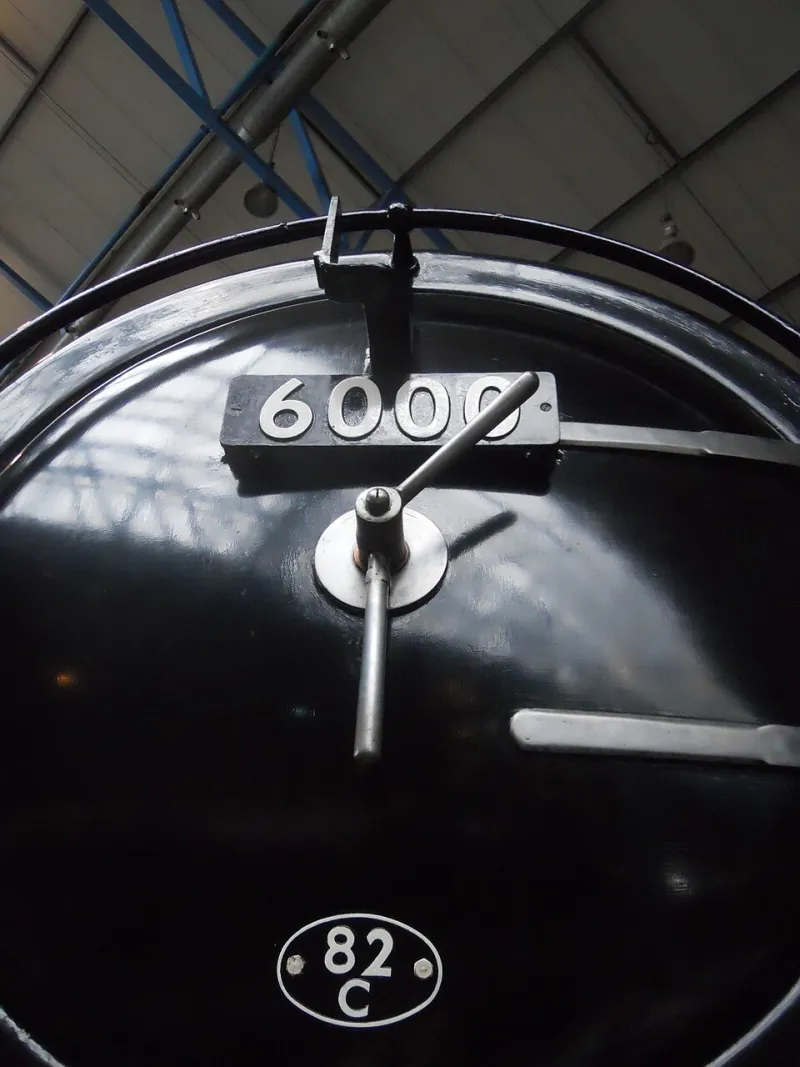
Photo: Mikey from Wythenshawe, Manchester, UK, CC BY 2.0, via Wikimedia Commons
An exhibition label is an editorial exercise in compression. It has to identify, situate and intrigue, often in fewer than fifty words, and it has to do so while a visitor is standing up, perhaps in poor light, perhaps with a child tugging at one hand. The form rewards discipline. It also exposes every abstraction, every inherited phrase and every sentence that has been allowed to survive because it sounded suitably institutional.
At Vaughn Chambers, the question we return to is not simply whether a label is accurate. It is whether the label still sounds as though a person made a judgement about an object and wanted to tell someone else something worth knowing. That distinction matters in a local museum in a market town as much as it does in a national institution. The wall is a tight column, but tightness need not produce a flat, administrative voice.
Start with the object, not the mission statement
Many labels begin with context that belongs elsewhere: the funder, the collection, the broader theme, the strategic aim. Context is not worthless, but it should not displace the object. A visitor has already chosen to look. The first sentence should reward that choice.
A useful test is to remove the first sentence and see whether the label becomes clearer. If it does, the sentence was probably doing institutional work rather than editorial work. Replace it with a specific observation: a material, a method, a date, a use, a detail visible in the surface. Specificity is not the same as exhaustive description. It is the difference between saying that an object is significant and showing the visitor what significance looks like in this particular case.
One true sentence before the facts
Labels often carry too many facts because no one wants to be accused of omission. The result can read like a catalogue entry with the life pressed out of it. Before drafting or revising, identify the one true sentence that the label exists to support. It might be that the maker improvised with a material in short supply; that the object was used in a domestic routine rather than a formal setting; that the work marks a change in the artist's practice.
Once that sentence is clear, the remaining facts can be arranged around it. Some will stay. Some will move to a digital record, a room sheet or a catalogue. Some will go. Editing is partly an act of selection, and selection is not a failure of scholarship. It is the necessary condition of a label that can be read in the time a visitor is likely to give it.
Cut the institutional fog, not the curator's judgement
The phrases that most often need attention are not egregious errors. They are the soft furniture of institutional prose: 'is concerned with', 'explores themes of', 'seeks to interrogate', 'forms part of a wider dialogue'. Such phrases can be useful in an academic essay, where the argument has room to unfold. On a wall label they tend to postpone the encounter.
Replacing them requires care. The aim is not to make every label breezy or to impose a house voice over the curator's judgement. A curator may legitimately wish to signal uncertainty, complexity or debate. The editor's task is to make that signalling precise. 'The attribution is disputed' is clearer than 'the work has been associated with a number of possible authors'. 'The date is uncertain' is more honest than 'can be dated broadly to the period'. Precision can preserve nuance rather than remove it.
Leave room for the visitor's eye
A label should not attempt to exhaust the object. It should direct attention and then step back. This is particularly important in small venues, where the label may be the only interpretive text and the temptation is to compensate with volume. A label that tells the visitor everything can leave them with nothing to do.
Intrigue is not the same as vagueness. A good closing sentence might point to a detail, a question or a tension that the visitor can investigate by looking again. It should not tease in the manner of advertising copy. The register is closer to a well-judged room note: modest, exact and confident enough to stop before the point is overworked.
Accuracy and accessibility are not the same task
Accessibility is often treated as a matter of simpler words, but a label can be plain and still be poorly edited. Plain English should not mean the removal of necessary technical terms; it means that those terms are introduced clearly and that sentences are structured for a single reading. Accuracy, meanwhile, cannot be sacrificed for smoothness. If a label is ambiguous about provenance, date or attribution, the editor should flag it rather than resolve it by instinct.
In practice, the two aims meet in sentence structure. Short sentences help, but a sequence of short sentences can become staccato and patronising. A better approach is to keep the main clause clear, place qualifications where they can be seen, and avoid burying the essential fact in a subordinate clause. This is especially important where labels are translated, recorded for audio or adapted for a website.
A short working method for the fifty-word wall
Begin by reading the label aloud, but not for sound alone. Listen for where the sentence loses its footing. Mark the first moment at which a visitor could reasonably stop reading and still have gained something. Then decide whether the remaining words are earning their place.
Next, separate the label into three functions: identification, context and invitation. Identification should be exact. Context should be selective. Invitation should be light. If any function is carrying too much, move the surplus elsewhere. Finally, check the label against the object itself. A detail that seems vivid in the draft may be invisible on the wall, and a phrase that seemed plain on screen may become dense at label size.
The result need not be lyrical. It should be human: a piece of writing that sounds as though someone looked carefully, thought about the visitor and chose the words rather than inheriting them. On a wall, in a tight column of fifty words, that is already a considerable achievement.