Marginal Notes, Not Marked Down: A UK Author's Guide to Reading an Editor's Track Changes

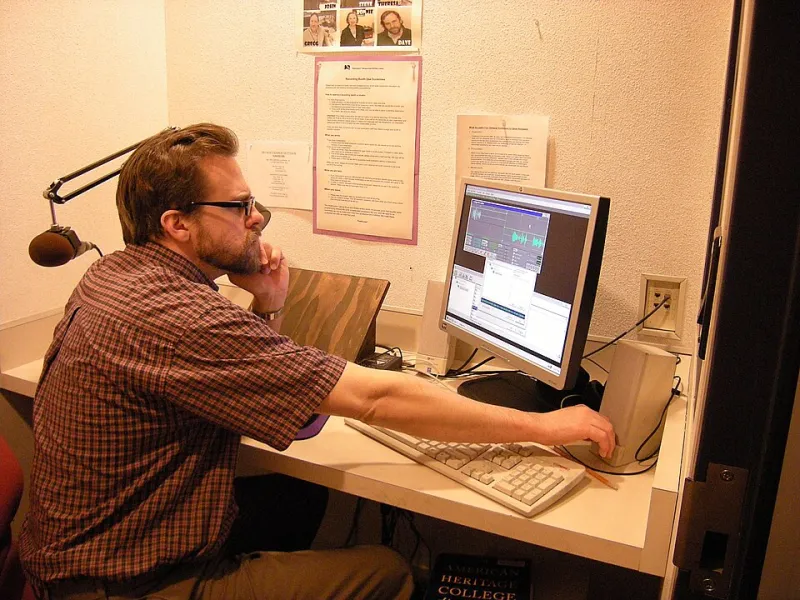
Photo: CEphoto, Uwe Aranas, CC BY-SA 4.0, via Wikimedia Commons
When a manuscript comes back from an editor, the first instinct is often to count the marks. Resist it. A tracked change is not a penalty; it is a record of attention. The editor has read closely, noticed where a sentence stumbled, where a term shifted, where a reader might pause. The task for the author is to read those notes as a working conversation — one with a beginning, a middle, and a set of decisions to make.
The Comment Is a Question, Not a Correction
Word's Track Changes and Google Docs' suggestion mode both encourage a misleading visual grammar: insertions and deletions appear as certainties. In practice, most editorial comments fall into three broad groups. Triage the queries into those groups before you accept or reject anything.
Clarity fixes. A sentence that has lost its subject, a pronoun with no clear referent, a paragraph that changes direction without signposting. These are not matters of taste. They are matters of reader comprehension. Accept them unless you can demonstrate that the ambiguity is deliberate and productive. If a line is meant to be uncertain, say so in your reply; do not simply reject the query.
House-style preferences. Single quotation marks for UK fiction, a particular treatment of numbers, the serial comma in a list, the use of en dashes rather than hyphens. These are conventions, not verdicts on your prose. If the publisher or client has a style sheet, follow it. If you are self-publishing, decide once and apply consistently. A query about a semicolon is not an accusation; it is often an editor applying a rule so that the reader is not distracted by inconsistency.
Genuine voice choices. A dialect form, a fragment used for rhythm, a deliberate repetition, a piece of British understatement that carries the sentence's meaning. Here the editor's query is an invitation to explain, not an instruction to change. The editor may not know why the line is doing what it is doing. Your reply should tell them.
Read the Query Before You Read the Fix
An editor may suggest a replacement that solves a local problem but alters a cadence you have been building for pages. Read the comment, not just the proposed wording. Comments often contain the diagnosis; the suggested wording is only one possible prescription. If the diagnosis is right but the prescription feels wrong, accept the problem and propose your own solution. That is not obstruction. It is editorial collaboration.
This is especially important in UK nonfiction, where a house style may prefer a plainer term than the author's specialist vocabulary. The editor's query might be flagging a genuine clarity issue for a general readership. It might also be flattening a distinction the author needs. The reply should distinguish between the two: 'I take the point about accessibility; could we gloss the term on first use instead of replacing it throughout?' That keeps the reader in view without surrendering the author's field of reference.
Reply in the Margin, Not in the Manuscript Alone
Use the reply function. A silent rejection tells the editor nothing; a brief rationale tells them how to read the rest of the manuscript. 'I want to keep the repetition here because it echoes the paragraph's opening' is more useful than deleting the comment. 'Happy to change this, but can we keep the short sentence at the end of the section?' gives the editor a constraint to work with.
If you accept a change, accept it. If you want a variation, propose it in the reply. If you need time, say so. Editors are used to authors who need a day to think. What causes difficulty is the author who rejects every voice query without explanation and then accepts every clarity query without reading it. Both responses treat the margin as a scoreboard rather than a conversation.
A Short Protocol for the First Pass
Read all comments once without changing anything. Mark each as clarity, style, or voice. Answer clarity queries first, because they often resolve themselves once the sentence is recast. For voice queries, write a one-line rationale before you decide. Then send a short summary note with the returned manuscript: 'I have accepted all clarity fixes; I have kept three repetitions for rhythm and explained why; I would like to discuss the treatment of dialect terms in chapter four.' This gives the editor a map of your decisions and makes the second pass more efficient.
The author's voice is not preserved by refusing every change. It is preserved by knowing which changes serve the reader and which ones serve a convention. An editor's track changes are marginal notes, not marked-down marks. Read them as proposals, answer them as a professional, and the manuscript will be stronger for the exchange.