Tidy, Generic, Untrustworthy: The Editorial Work AI Drafts Still Need
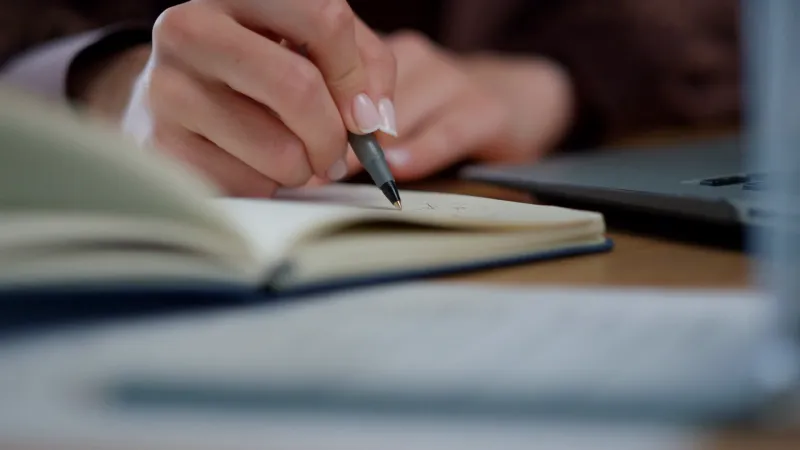
Photo: editor reviewing AI generated draft on computer screen with notes, via dm0qx8t0i9gc9.cloudfront.net
AI-assisted drafting has become ordinary. In 2026, a UK author may use a model to sketch a chapter, a marketing team may use one to produce a first pass at a case study, and a small business may use one to turn a set of notes into a newsletter. The output often arrives grammatically clean, neatly structured and entirely plausible. That is precisely why it needs an editor.
The problem is not that the draft is bad in the ordinary sense. The problem is that it is smooth. It has no rough edges to catch the eye, no obvious repetitions to flag, no howling errors to justify a line edit. And yet it may be vague where it should be specific, confident where it should be cautious, and fluent where it should sound like a particular person or organisation. The editorial task is to decide what the draft can be trusted to do, and what it cannot.
Polish is not proof
A clean sentence is not a checked sentence. AI-assisted drafts are good at producing the shape of an argument without the evidence that would make it true. Names, dates, job titles, prices, statistics and quotations all need verification against primary sources. A claim that sounds like common knowledge may have been assembled from several uncertain fragments. A quotation may be accurate in substance but wrong in wording. A date may be off by a year in a way that changes the meaning.
The practical response is a claim ledger. For every factual assertion that matters, record where it came from and who checked it. This is not bureaucratic theatre. It is the difference between a draft that can be defended and one that merely reads well. In a book manuscript, the ledger can live alongside the notes on sources. In business copy, it can be a short table attached to the brief. The point is to make verification visible.
The generic sentence and the missing witness
AI drafts tend to smooth away the specific. They produce sentences such as we are committed to delivering exceptional service, which is not a claim a reader can picture. The editor's job is to ask for the missing witness: who said it, when, where, and what changed as a result. A named customer, a date, a place, a figure, a concrete detail from a site visit—these are what make copy credible.
For UK businesses, this is also a matter of regulatory risk. Advertising claims are subject to the CAP Code, consumer law and sector rules. A phrase such as environmentally friendly or award-winning may be true, but it needs evidence and context. A testimonial needs to be genuine and used with permission. A comparison needs a basis. An editor does not need to be a lawyer to flag these issues, but the editorial pass should create a clear route to the person who can resolve them.
Risk is an editorial category
The most useful editorial question about an AI-assisted draft is not whether it was generated by a machine. It is what happens if the draft is wrong. A newsletter with a slightly generic tone is a minor problem. A financial promotion with an unverified performance claim is not. A patient information leaflet with a missing caveat is not. A recruitment advert with a careless phrase about a protected characteristic is not.
That means the edit should include a risk review alongside the language review. Flag absolute claims, superlatives, guarantees, medical or financial assertions, and statements about legal or regulatory status. Check that disclaimers are not being used to rescue a claim that should not be made at all. Check that personal data in examples has been handled lawfully and that consent for quotations is in place. These are not reasons to reject AI-assisted drafting. They are reasons to edit it with adult supervision.
Rhythm is evidence of a mind
Voice is harder to check than facts, because it is not a single feature. It lives in sentence length, in the choice of connectives, in the willingness to use a short sentence after a long one, in the particularity of examples, in what the writer finds funny or important. AI drafts often have a uniform temperature. Every paragraph is competent. Every transition is signposted. Nothing is allowed to be abrupt.
An editor can restore rhythm by reading the draft aloud and marking the places where the voice flattens. Then ask the writer for a sample of their own unassisted prose on the same subject. Compare the two. The differences will show what has been lost: a habit of understatement, a preference for concrete nouns, a willingness to admit uncertainty. Those are not decorative. They are the evidence that a person is present.
Where polish becomes erasure
There is a point at which editing for polish becomes editing for anonymity. It happens when every idiosyncrasy is removed, every hedge is tidied away, every sentence is made to march at the same pace. The result may be faultless, but it will not be distinctive. For an author, that is a loss of the thing that makes the book worth reading. For a business, it is a loss of the thing that makes the brand recognisable.
The editorial test is not whether a sentence could have been written by a machine. It is whether the sentence could have been written by this writer, for this reader, in this situation. If the answer is no, the polish has gone too far.
A working pass for AI-assisted drafts
A practical sequence is to begin with provenance: note which parts of the draft were generated, which were written by a person and which were assembled from source material. Then build the claim ledger. Then do a voice audit against a sample of the writer's own prose. Then read aloud for rhythm. Finally, keep a decision log of what was changed and why, so that the writer can see where the editor has intervened and where the draft has been left alone.
None of this requires an editor to become a technologist. It requires the same virtues that editorial work has always required: curiosity about sources, respect for the reader and a refusal to confuse fluency with truth. AI-assisted drafts are not uniquely dangerous. They are simply a new version of an old problem—copy that looks finished before it is. The editorial pass is what makes it fit to publish.