The Founder's Fingerprint: A UK Business Copy Edit Case Study
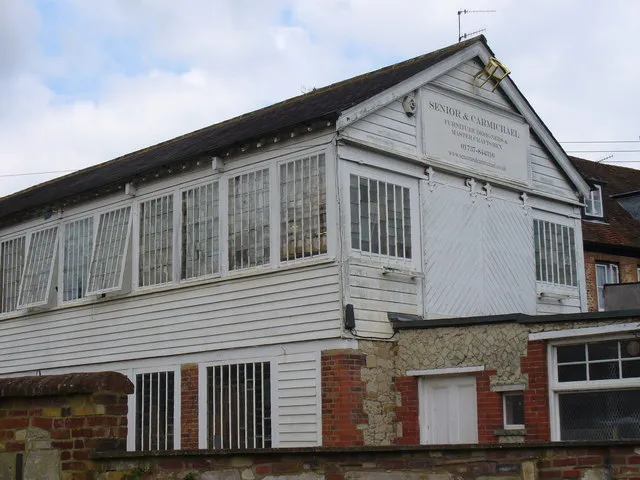
Photo: Colin Smith, CC BY-SA 2.0, via Wikimedia Commons
The brief arrived with a familiar anxiety. A UK business—a small furniture maker in the South West—had commissioned a website rewrite and was worried that professional editing would make it sound like everyone else. The founder had built the company on plain speech, practical detail, and a suspicion of design-world jargon. Her draft copy was warm but occasionally loose: sentences circled their subject, qualifications piled up, and the same point appeared in three places. The task was not to replace her voice. It was to remove the friction that stopped readers hearing it.
The brief: clarity without corporate drift
The client asked for copy that would work on a website, in a brochure, and in a pitch to trade buyers. The audience was split between homeowners commissioning a single piece and interior designers specifying for projects. The founder wanted to sound credible without sounding corporate. She also wanted to keep certain phrases—'built to be lived with', 'stubborn about grain'—because they were part of how she talked about the work. Those phrases became fixed points in the edit. Anything that threatened them was treated with suspicion.
Reading for voice before line editing
Before changing a single sentence, we read the whole draft aloud and marked what we called voice markers. These were not stylistic preferences in the abstract; they were observable habits. The founder favoured short declarative sentences followed by a longer explanatory one. She used concrete nouns—oak, ash, joint, workshop—more often than abstractions. She was comfortable with first-person plural, but only when it referred to the whole team. She disliked exclamation marks and rhetorical questions. We wrote these down and used them as constraints. Good line editing begins with listening, not correcting.
Before and after: two excerpts
The original homepage paragraph read:
We make furniture that is built to last a lifetime and we believe that good design should be accessible to everyone, which is why we work closely with our clients to create pieces that are both beautiful and functional.
The revised version reads:
We build furniture to outlast fashion. Good design should not be a closed shop, so we work closely with each client to make pieces that earn their place in a room: useful, beautiful, and built for decades.
The second excerpt came from a section on materials. The original read:
Our approach is centred around a commitment to sustainability and craftsmanship, and we are passionate about using responsibly sourced materials.
The revision reads:
We are stubborn about two things: the grain of the wood and where it comes from. Every board is responsibly sourced, and every joint is cut by hand in our workshop.
The editorial choices behind the changes
The first revision removes throat-clearing. 'We make furniture that is built to last a lifetime' is not wrong, but it spends nine words arriving at an idea that 'outlast fashion' delivers in three. 'Accessible to everyone' is a phrase that sounds inclusive while saying little; 'not a closed shop' keeps the founder's plain-spoken register and makes a sharper point. The colon before the list is a small structural intervention: it turns a trailing clause into a memorable triad. None of this invents a new personality. It clarifies one that was already present.
The second revision required more care. 'Centred around a commitment to sustainability and craftsmanship' is the kind of sentence that appears in a hundred brand guidelines and belongs to none of them. The founder had used the phrase 'stubborn about grain' in conversation. We asked whether the copy could use it. She agreed, and supplied the detail about responsibly sourced boards and hand-cut joints. The edit did not manufacture authenticity; it selected the founder's own language and arranged it so that readers could hear it. 'Passionate about' was removed because it is a claim; 'every board is responsibly sourced' is a fact.
What we left alone
We did not remove the first-person plural. We did not replace 'workshop' with 'studio' or 'atelier'. We did not impose a uniform sentence length. We kept one deliberate fragment—'Useful, beautiful, and built for decades.'—because it sounded like the founder, even though a grammar checker might query it. We also retained the word 'stubborn', despite its mildly abrasive edge, because it carried more character than 'committed' and more truth than 'passionate'. The point of line editing is not to sand every surface smooth. It is to remove the splinters that distract from the grain.
Lessons for UK businesses
Three lessons emerged from the project. First, voice is not a decorative layer added after clarity; it is often the most efficient route to clarity. The founder's concrete nouns did more persuasive work than any abstract claim about excellence. Second, AI tools and grammar checkers are useful for the mechanical layer but poor at recognising deliberate character. A tool will flag 'stubborn' as negative; a human editor will ask whether the negativity is doing useful work. Third, the brief matters. If an editor is told only to 'make it professional', the safest route is generic prose. If an editor is told which phrases are non-negotiable and which audiences must be addressed, the result can be both polished and personal.
The standard to aim for
A good copy edit should leave a client sounding more like themselves, not less. That may mean cutting a paragraph, reordering a sentence, or replacing a vague claim with a specific detail. It should not mean replacing a distinctive phrase with a safer synonym or turning a founder's argument into a committee's summary. Polish is not sandpaper. It is a sharp plane: it removes what is rough without erasing the grain. For UK businesses, that distinction is not merely aesthetic. In a crowded market, the voice that sounds like a person is often the one that earns trust.