The Biographical Note: Editing an Author Bio Without Sanding It Smooth
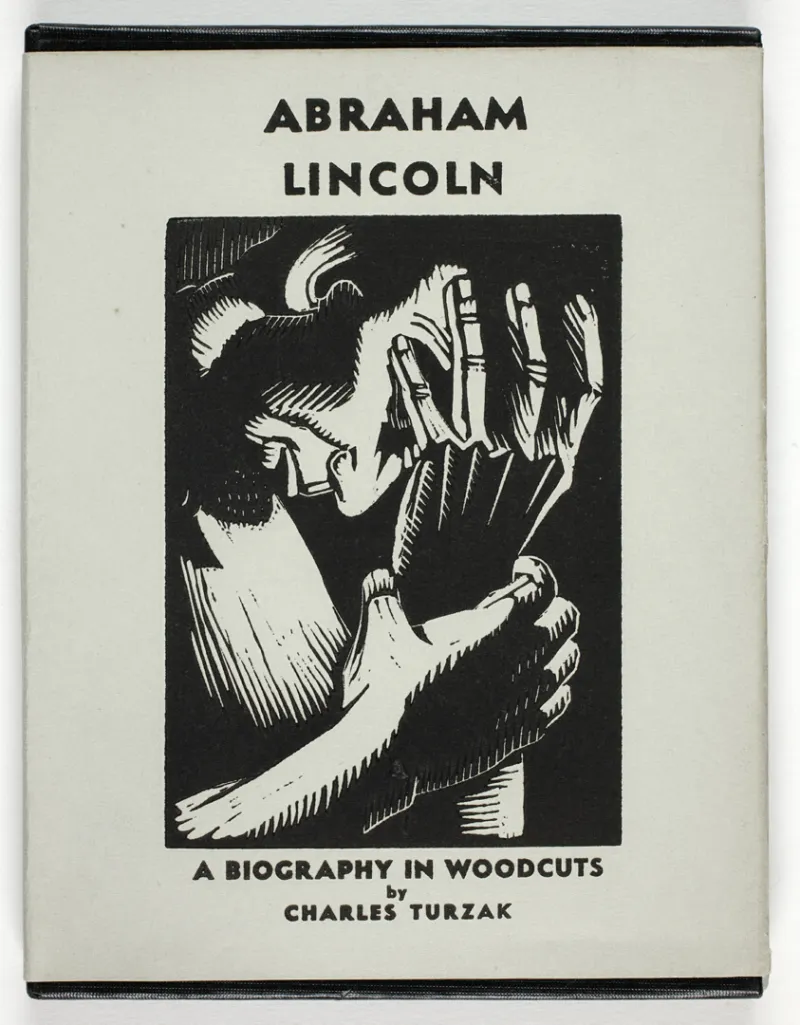
Photo: Charles Turzak, Public domain, via Wikimedia Commons
An author bio is a small piece of copy with a large job. It must establish credibility, give a sense of the person behind the work and fit the space allowed by a book jacket, a festival programme, an agency page or a speaker listing. It is also almost always written in the third person, which is where the trouble begins.
First-person copy tends to carry the author's voice in its rhythm and stance: the dry aside, the self-aware qualification, the sentence that lands on a concrete detail rather than an adjective. Convert that copy to third person and the pronouns change easily enough; the personality is what goes missing. The result is a credential pile: prize listings, publication credits, a phrase about being 'passionate' about something, and no recognisable person at the end of it.
What the third person can keep
The third person does not require neutrality. It requires a change of grammatical subject, not a change of character. An author who writes 'I am suspicious of tidy endings' can become 'She is suspicious of tidy endings'. The sentence is still doing the same work. An author who writes 'I have spent ten years listening to the way people avoid the point' can become 'She has spent ten years listening to the way people avoid the point'. The fact is preserved; so is the angle of attention.
The mistake is to treat the third person as a formal costume. Editors sometimes reach for a more elevated register because the copy is now about someone rather than by them. The bio begins to sound like a citation. A useful rule is to keep the author's sentence order and sentence length wherever the facts allow. If the first-person version is short and dry, the third-person version should not become long and eager. If the first-person version has a wry turn, the third-person version can usually keep it.
A short framework for translation
Begin by reading the first-person bio aloud. Mark three sentences that could only have been written by this author: not the most impressive facts, but the lines that carry stance. These are the voice-bearing sentences. They may be modest. 'I write slowly and revise a great deal' is more useful than 'I am an award-winning novelist' if the first is true and the second is not.
Next, separate facts from stance. Facts include publications, prizes, current roles, location, representation and subjects. Stance includes preoccupations, temperament, humour and the angle from which the author approaches the work. Facts can be checked and ordered. Stance has to be protected.
Then draft the third person in the same order as the original. Do not begin with a new thesis about the author. Begin where the author began. If the first-person version opens with the work, open with the work. If it opens with a place, open with the place. This simple discipline prevents the bio from drifting into generic copy.
After that, choose one concrete detail. A bio of eighty words can carry one particular image or habit without becoming whimsical. 'She writes at a kitchen table in Bristol' is not necessary unless it tells the reader something. 'She writes about the awkward pauses in family life' is a stance and a subject at once. One such detail is usually enough.
Finally, calibrate the claims. This is where UK bios often go wrong in both directions: either the author is 'one of the most exciting voices in British fiction' or the copy apologises for taking up space. Confidence is not the same as puffery. 'Her work has appeared in the London Review of Books' is confident because it is verifiable. 'She is celebrated for her wit' is puffery unless a named reviewer said so. If a quote is used, attribute it and keep it short.
UK conventions: brevity, understatement and the verifiable claim
British author bios tend to favour brevity and a certain dryness. A book jacket bio is often between sixty and one hundred and twenty words; a festival programme entry may run to one hundred and fifty; an agency page can carry a longer career narrative; a speaker listing usually needs fifty to one hundred words focused on authority and topics. The same author may need four versions, not one.
Tone matters as much as length. Understatement is not the same as self-deprecation. 'She writes fiction' is a confident sentence. 'She rather hopes people might enjoy her little book' is not modest; it is awkward. The middle ground is plain statement with one or two carefully chosen particulars.
Puffery has a recognisable vocabulary: 'passionate', 'unique', 'world-class', 'leading', 'celebrated', 'thrilled'. Some of these words can be earned, but most cannot. 'Award-winning' should mean the author has won an award, not that they were longlisted. 'Best-selling' should mean a recognised bestseller list. 'Acclaimed' is an opinion unless it is attached to a publication or a quote. A useful editorial test is to ask what evidence would appear beside the claim if a careful reader challenged it. If there is no answer, cut the claim or replace it with a fact.
Pronouns deserve the same care. Check the author's preferred pronouns rather than inferring them from a name. If the author uses they, the bio should use they consistently. If the author uses a professional name and a different legal name, use the name that appears on the book or the platform unless there is a reason to do otherwise. Do not alternate between the full name, the surname and 'the author' for variety; in a short bio, repetition of the surname is usually less distracting than a thesaurus.
A worked example
A first-person draft might read: 'I am a novelist and writing teacher based in Leeds. My second book, The Long Room, came out in 2024. I am interested in the awkward pauses in family life, and I run a workshop for people who think they cannot write.'
A third-person edit could read: 'Alex Morgan is a novelist and writing teacher based in Leeds. Her second novel, The Long Room, was published in 2024. She writes about the awkward pauses in family life and runs a workshop for people who believe they cannot write.'
The edit changes the pronouns and tightens the publication sentence. It keeps the Leeds detail, the subject and the workshop. It does not add 'acclaimed' or 'passionate'. It also does not remove the slight dryness of 'people who believe they cannot write'. That phrase is part of the voice. If the author's first-person version had said 'people who think they can't write', the contraction might be kept in a festival programme and expanded in a formal agency page, depending on house style. The point is to make a deliberate choice, not to sand every edge.
Editing for the venue
A jacket bio has to sell the book without sounding like an advertisement. Keep the current book prominent, give one line of stance and one or two credentials. A festival programme can be more present-tense and event-focused: what the author will discuss, what they have written, why they are on this panel. An agency page can carry a career arc and a clear statement of representation. A speaker listing should lead with authority and topics, not with a childhood anecdote.
At Vaughn Chambers, the test is simple: would the author recognise themselves in the third-person version? Not every sentence, but the person. If the bio could be swapped onto another author's page with only the facts changed, it has been sanded too smooth. The third person should be a point of view, not a disguise.